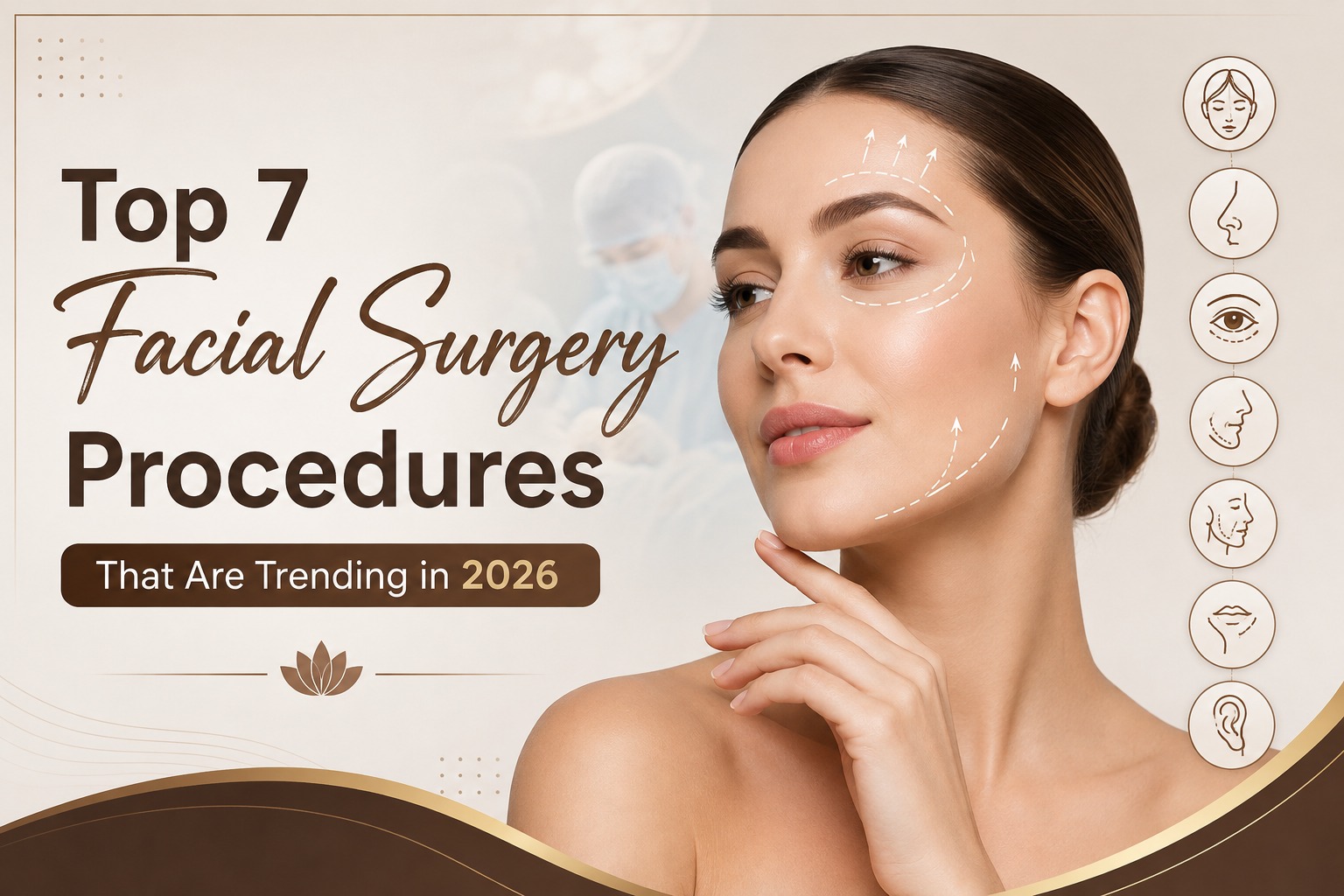
Top 7 Facial Surgery Procedures That Are Trending in 2026
Facial plastic surgery is going through a quiet transformation. The days of dramatic, "done" looking results are fading, and 2026 is shaping up to be the year of natural, structural, and long-lasting outcomes. Patients aren't chasing a completely new face anymore — they want to look like a well-rested, more refined version of themselves.
Whether you're researching options for the first time or comparing procedures before a consultation, this guide breaks down the seven facial surgery trends dominating conversations, search results, and surgeon consultation rooms this year.
Why Facial Surgery Trends Are Shifting in 2026
Before diving into the list, it helps to understand the bigger picture. Facial plastic surgery associations have reported a notable rise in overall procedure volume this year, alongside a strong shift in patient mindset. More people are choosing surgery earlier, opting for subtler changes, and prioritizing techniques that address the deeper structure of the face rather than just tightening skin. Social media has also made patients far more open about their procedures, which means more informed, research-driven decisions before ever stepping into a clinic.
With that context, here are the seven procedures leading the way.
1. Deep Plane Facelift
The deep plane facelift has become the gold standard for facial rejuvenation in 2026, and for good reason. Unlike traditional facelifts that primarily tighten the skin, this technique repositions the deeper facial tissue layer (the SMAS) along with its underlying ligaments. The result is a more natural lift that avoids the stretched or "windswept" appearance older techniques were known for.
Why it's trending: It delivers longer-lasting results with a more natural finish, making it the preferred choice for patients who want a refreshed look without an obvious "surgical" giveaway.
2. Early-Intervention or "Maintenance" Facelifts
One of the biggest mindset shifts this year is timing. Instead of waiting until the signs of aging are advanced, more patients — often in their 40s — are opting for smaller, earlier facelifts or neck lifts. The goal isn't a dramatic transformation but a subtle refresh that maintains a youthful baseline over time.
Why it's trending: Earlier surgery generally means less correction is needed, shorter recovery, and a more natural-looking outcome that doesn't scream "I had work done."
3. Standalone Neck Lift Surgery
The neck is increasingly being treated as its own aesthetic zone rather than an afterthought to a facelift. Many patients feel their neck ages faster than their face, and standalone neck lift procedures are now one of the fastest-growing requests among both men and women.
Why it's trending: It offers a targeted solution for jawline definition and neck laxity without requiring a full facelift, appealing to patients who want a specific fix rather than a broader overhaul.
4. Fat Grafting (Autologous Fat Transfer)
Fat grafting — using a patient's own body fat to restore volume in areas like the cheeks, temples, and under-eyes — has seen a sharp rise in demand recently, and that momentum is expected to continue through 2026. As faces age, they don't just sag, they also lose volume, and fat grafting addresses that structural loss directly.
Why it's trending: It uses the body's own tissue, integrates naturally, and is increasingly paired with facelifts and rhinoplasty for a fuller, more balanced result.
5. Refined, Function-First Rhinoplasty
Rhinoplasty remains one of the most requested facial procedures, but the aesthetic goals are evolving. Trend-driven looks like extremely narrow bridges or upturned "Barbie nose" tips are losing favor because they can compromise nasal breathing and tend to age poorly. In their place, surgeons are seeing more demand for natural-looking, structurally sound results that suit the patient's individual facial proportions.
Why it's trending: Patients are prioritizing long-term function and a natural look over short-lived aesthetic fads, reducing the risk of needing revision surgery down the line.
6. Beautification Facelifts
A newer concept gaining ground in 2026 is the "beautification facelift" — a technique that goes beyond reversing signs of aging to actively enhance facial harmony. This can include refining the jawline, improving midface contour, and creating better overall balance between facial features.
Why it's trending: It appeals to patients who want more than just a youthful reset; they want their features to look more proportionate and defined, regardless of age-related changes.
7. Surgical Hairline Restoration and Scalp Advancement
Hairline aesthetics have moved firmly into the facial surgery conversation. Procedures like hairline lowering (scalp advancement) and surgical hair restoration are trending because they offer permanent, natural-looking results, unlike many topical or non-surgical alternatives.
Why it's trending: A well-proportioned hairline significantly affects overall facial balance, and patients are increasingly treating it as part of a complete facial rejuvenation plan rather than a separate concern.
What This Means If You're Considering Facial Surgery
If there's one theme tying all seven trends together, it's this: 2026 is about subtlety, structure, and longevity. Patients are moving away from dramatic, one-time transformations and toward thoughtful procedures that age well and preserve natural facial harmony.
That said, trends should never be the only factor in choosing a procedure. What works beautifully for one face may not suit another. A few things worth keeping in mind before booking a consultation:
Your anatomy matters more than trends. A technique that's popular right now may not be the right fit for your facial structure or goals.
Board certification is non-negotiable. Always verify that your surgeon is board-certified in facial plastic surgery or plastic surgery specifically.
Ask about longevity, not just before-and-after photos. A good surgeon will explain how a procedure ages over 5, 10, or 15 years, not just how it looks in the first few weeks.
Recovery time varies widely. A standalone neck lift and a deep plane facelift, for example, come with very different downtime expectations.
Frequently Asked Questions
What is the most popular facial surgery procedure in 2026? Facelifts, rhinoplasty, and eyelid surgery (blepharoplasty) continue to be the most commonly performed facial procedures, with the deep plane facelift technique leading demand this year.
Is early facial surgery actually a good idea? For many patients, yes. Earlier, smaller interventions often mean less correction is needed and a more natural-looking result, though this depends on individual facial anatomy and goals — a qualified surgeon can advise what's appropriate.
How long does a deep plane facelift last? Because it addresses the deeper structural layers of the face rather than just the skin, a deep plane facelift is generally considered to be longer-lasting than traditional facelift techniques, though results vary by patient.
Are non-surgical treatments replacing facial surgery? Not exactly. Non-surgical treatments like neuromodulators and fillers remain popular for maintenance, but many patients are recognizing that surgery, when appropriate, delivers more definitive and lasting results for structural concerns.
Final Thoughts
Facial surgery in 2026 isn't about chasing a trendy look — it's about achieving results that age gracefully and feel authentic to the patient. From deep plane facelifts to refined rhinoplasty and hairline restoration, the common thread across all seven trending procedures is a shift toward natural, structural, and personalized outcomes.
If you're considering any of these procedures, the most important next step is a consultation with a board-certified facial plastic surgeon who can assess your unique facial anatomy and help you decide what actually aligns with your goals — not just what's trending.
This article is for informational purposes only and does not constitute medical advice. Always consult a qualified, board-certified surgeon before making decisions about facial surgery.