Before and After: What to Really Expect from Face Surgery
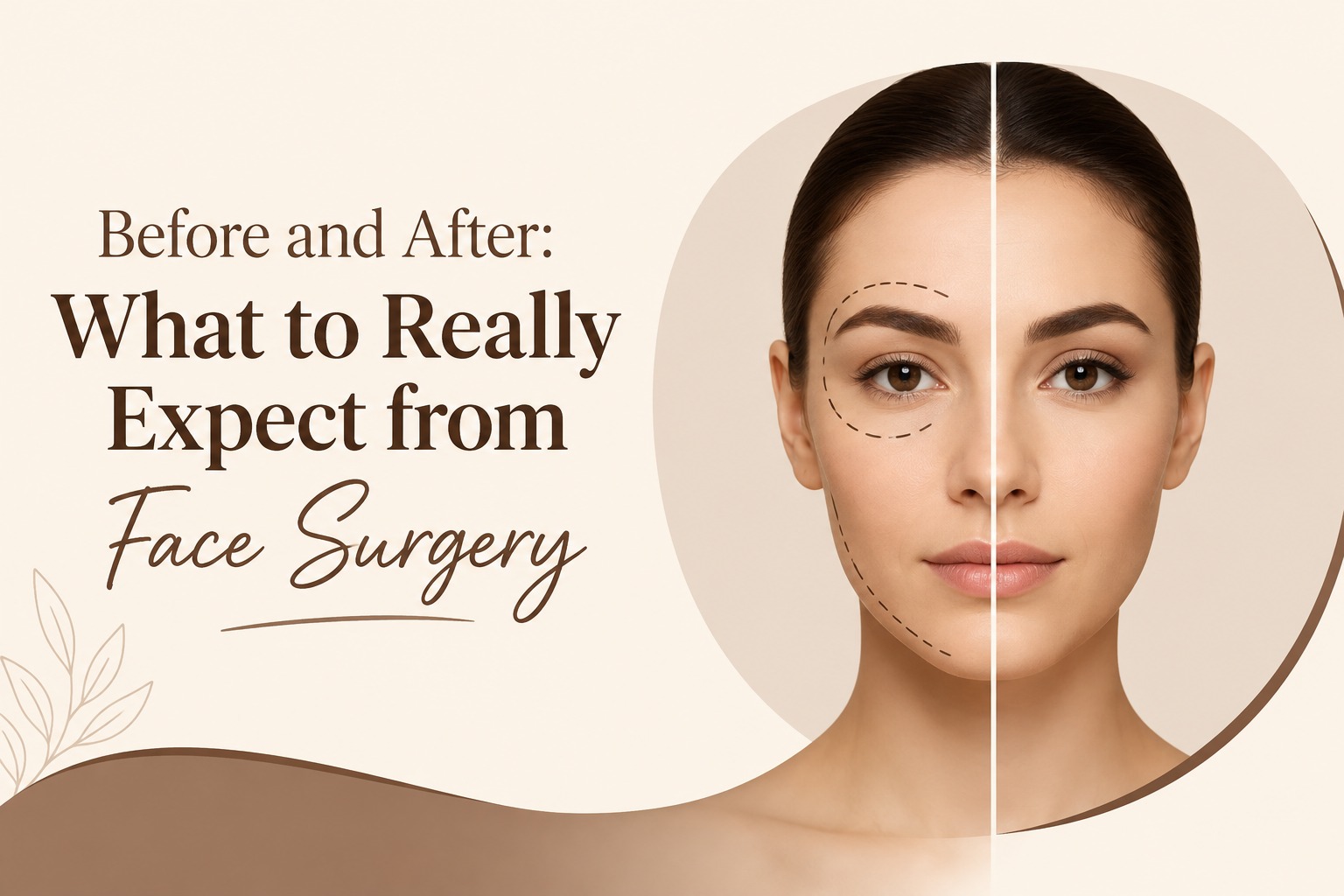
Face surgery — whether it's a facelift, rhinoplasty, eyelid surgery, or a full facial rejuvenation procedure — is one of the most researched topics in cosmetic medicine today. Yet, most people considering it have the same worry: what will I actually look like before and after, and what does the journey between the two really involve?
Social media often shows polished "after" photos without explaining the weeks of healing, swelling, and patience that come in between. This guide breaks down the entire process honestly — from your first consultation to your final results — so you know exactly what to expect at every stage.
What Happens Before Face Surgery
1. The Initial Consultation
Every successful face surgery starts with a detailed consultation. Your surgeon will:
Review your medical history and current health
Discuss your goals and realistic expectations
Examine your skin type, bone structure, and facial symmetry
Recommend the most suitable procedure (facelift, rhinoplasty, blepharoplasty, etc.)
This is also the stage where surgeons often use digital imaging or 3D simulations to give you a preview of possible outcomes — though real results can vary based on healing and skin elasticity.
2. Pre-Surgery Preparation
In the weeks leading up to surgery, you'll typically be asked to:
Stop smoking (it slows healing significantly)
Avoid blood-thinning medications and certain supplements
Get pre-operative blood tests and clearance
Arrange post-surgery support at home, since you won't be able to drive or care for yourself immediately
Mental preparation matters just as much as physical. Understanding that visible results take time — not days, but often months — helps set realistic expectations from day one.
What Happens During Face Surgery
Most face surgeries are performed under local anesthesia with sedation or general anesthesia, depending on the complexity. Procedures generally last between one and four hours. Common techniques include:
Facelift (Rhytidectomy): Tightening underlying muscles and removing excess skin
Rhinoplasty: Reshaping the nose's cartilage and bone structure
Blepharoplasty: Removing excess skin/fat around the eyes
Fat Grafting or Fillers: Restoring volume in sunken areas
Surgeons today emphasize minimally invasive techniques where possible, which often means smaller incisions, less scarring, and faster recovery than procedures performed a decade ago.
What to Expect Immediately After Surgery
The first 48–72 hours are usually the most intense part of recovery. You can expect:
Swelling and bruising (most prominent in the first 3–5 days)
Mild to moderate discomfort, managed with prescribed medication
Bandages or compression garments to support healing tissue
Difficulty with facial expressions like smiling or chewing initially
It's completely normal to feel unsure or even discouraged during this phase — your face will not look like the "after" photo yet. This is the part most people don't talk about, but it's a critical and expected stage of healing.
The Recovery Timeline: Week by Week
Timeframe | What to Expect |
|---|---|
Week 1 | Peak swelling and bruising; rest is essential |
Week 2 | Swelling starts reducing; stitches may be removed |
Weeks 3–4 | Most bruising fades; you can return to light activities |
Weeks 6–8 | Swelling largely resolved; results begin looking natural |
Months 3–6 | Final results emerge as tissues fully settle |
Every patient heals at a different pace depending on age, skin type, procedure type, and how closely post-op care instructions are followed.
Long-Term Results: What "After" Really Looks Like
Contrary to what many expect, the true "after" result isn't visible right after surgery — it typically takes 3 to 6 months for swelling to fully subside and for skin to settle into its new contour. Scars, if any, continue to fade for up to a year.
Patients often report that:
Results look increasingly natural over time, not "overdone"
Confidence improvements are just as significant as physical changes
Touch-up procedures (if needed) are usually minor and done after full healing
Common Risks and How to Minimize Them
While face surgery is generally safe when performed by a qualified, board-certified surgeon, it's important to be aware of potential risks:
Infection or delayed healing
Asymmetry or unevenness
Numbness or altered sensation (usually temporary)
Scarring, which fades but may not disappear completely
How to reduce risks:
Choose an experienced, certified surgeon with verified before-and-after case studies
Follow pre- and post-operative instructions precisely
Avoid rushing back to strenuous activity
Attend all follow-up appointments
Frequently Asked Questions
How long before I can go back to work after face surgery? Most people return to desk jobs within 1–2 weeks, though visible swelling may still be present. Physically demanding jobs may require 3–4 weeks off.
Will face surgery results look natural? Yes, when performed correctly and given adequate healing time (3–6 months), results typically look natural rather than "surgical."
Is face surgery painful? Discomfort is common but usually manageable with prescribed pain medication. Most patients describe it as tightness or pressure rather than sharp pain.
How long do face surgery results last? Depending on the procedure, results can last anywhere from 5 to 15 years, though natural aging continues afterward.
Can I combine multiple face procedures at once? Yes, many patients combine treatments (e.g., facelift with eyelid surgery) to achieve balanced, comprehensive results — your surgeon will advise if this is safe for your case.
Final Thoughts
Face surgery is a significant decision, and understanding the complete journey — not just the polished "after" photo — helps set realistic expectations and leads to better satisfaction with results. The key to a smooth experience lies in choosing a qualified surgeon, following recovery guidelines carefully, and giving your body the time it needs to heal fully.
If you're considering face surgery, book a consultation with a certified specialist who can assess your unique facial structure and guide you toward the safest, most natural-looking outcome.