Is Hair Transplant Safe & Permanent? Jaipur Patients’ Most Asked Questions Answered
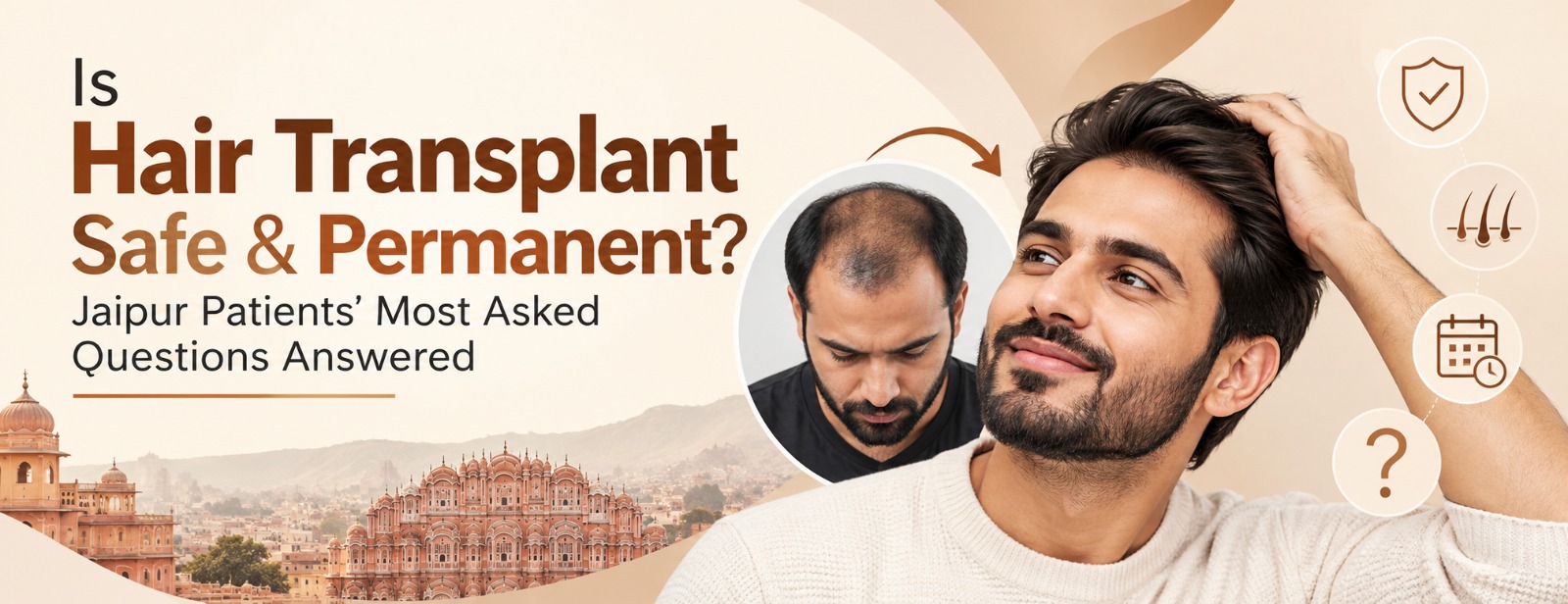
Hair loss is a growing concern among men and women in Jaipur. Hot weather, hard water, pollution, stress, poor diet and genetics all play a role. Many people now consider a hair transplant in Jaipur as a long-term solution, but two questions come up again and again: Is it safe? And will the results last forever?
This guide answers the most common questions patients ask before getting a hair transplant, in simple language.
What Is a Hair Transplant?
A hair transplant is a surgical procedure in which healthy hair follicles are taken from a donor area (usually the back or sides of the scalp) and implanted into thinning or bald areas. These donor hairs are naturally resistant to DHT, the hormone responsible for most pattern baldness. That is why transplanted hair keeps growing in its new location.
The two most popular techniques are:
FUE (Follicular Unit Extraction): Individual follicles are extracted one by one and implanted. It leaves tiny dot-like marks that heal quickly.
DHI (Direct Hair Implantation): A variation of FUE where follicles are implanted using a special pen-like tool, which offers more control over direction and density.
Is Hair Transplant Safe?
Yes, a hair transplant is generally considered safe when performed by a qualified dermatologist or plastic surgeon in a properly equipped clinic. It is a minor surgical procedure done under local anaesthesia, and most patients go home the same day.
Safety depends on three factors:
The surgeon’s qualification and experience
Hygiene and sterilisation standards of the clinic
Whether you are a suitable candidate
Problems usually arise when the procedure is done by untrained technicians or in unregulated setups that offer unrealistically low prices.
Possible Side Effects
Like any procedure, a hair transplant can cause temporary side effects:
Swelling on the forehead or around the eyes (2 to 4 days)
Redness and mild itching in the treated area
Small scabs for 7 to 10 days
Numbness in the donor or recipient area
Temporary shedding of transplanted hair (called “shock loss”)
Rare complications include infection, folliculitis (inflamed follicles) and unnatural-looking hairlines. These are mostly avoidable by choosing an experienced doctor and following aftercare instructions.
Is Hair Transplant Permanent?
In most cases, yes. Because the transplanted follicles come from the DHT-resistant donor zone, they typically continue to grow for life, just as they would have in their original location.
However, there is an important point many people miss: a hair transplant does not stop hair loss in the non-transplanted areas. If you are young and your hair loss is still progressing, the hair around the transplanted zone may keep thinning over time. This is why doctors often recommend medical treatment such as minoxidil, finasteride (where suitable) or PRP therapy alongside the transplant to protect your existing hair.
So the transplanted hair is permanent, but maintaining your overall hair density needs a long-term plan.
Who Is a Good Candidate?
You may be a good candidate for a hair transplant in Jaipur if:
You have pattern baldness (male or female) that has stabilised
You have enough healthy donor hair
You are in good general health
You have realistic expectations
You are generally above 25 years of age (younger patients need careful evaluation)
A hair transplant may not be suitable for people with active scalp infections, uncontrolled diabetes, certain autoimmune conditions or very limited donor hair. Always get a personal consultation before deciding.
How Long Does It Take to See Results?
Hair growth after a transplant is gradual:
Time After Surgery | What to Expect |
|---|---|
Week 1–2 | Scabs fall off, redness settles |
Week 2–4 | Transplanted hair sheds (normal) |
Month 3–4 | New hair starts to appear |
Month 6–8 | Visible thickness and coverage |
Month 12–18 | Final, natural-looking results |
Patience is important. Final results usually take a full year or more.
Recovery and Aftercare Tips
Good aftercare protects your investment. Most doctors advise:
Avoid touching, scratching or rubbing the scalp
Sleep with your head slightly elevated for the first few nights
Avoid direct sunlight and dusty areas, which is especially important in Jaipur’s summer
Wash your hair gently as instructed by your doctor
Avoid smoking, alcohol and heavy exercise for the period your doctor recommends
Take prescribed medicines on time
Most people return to desk work within 2 to 5 days.
Hair Transplant Cost in Jaipur
The cost of a hair transplant in Jaipur depends on the number of grafts required, the technique (FUE or DHI), the doctor’s expertise and the clinic’s facilities. Generally, Jaipur is more affordable than metro cities like Delhi or Mumbai, without compromising on quality when you choose a reputed clinic.
Be careful of very cheap packages. Hair transplant is a one-time procedure, so quality matters far more than saving a small amount. Ask for a clear written quote, and check what is included (medicines, follow-ups, PRP, etc.).
How to Choose the Right Hair Transplant Clinic in Jaipur
Before booking, check these points:
Doctor’s qualification: Look for a certified dermatologist or plastic surgeon, not just a technician.
Experience and real results: Ask to see genuine before-and-after photos and patient reviews.
Technology and hygiene: The clinic should be clean, licensed and well equipped.
Honest consultation: A good doctor will tell you if you are not a good candidate.
Follow-up care: Proper post-surgery support is a sign of a trustworthy clinic.
Transparent pricing: No hidden charges.
Frequently Asked Questions (FAQs)
1. Is a hair transplant painful?
The procedure is done under local anaesthesia, so you feel little to no pain during surgery. Mild discomfort may occur afterwards and is easily managed with prescribed medicines.
2. Is hair transplant 100% permanent?
The transplanted hair is generally permanent, but results vary from person to person. Hair loss in other areas can continue, so ongoing care may be needed.
3. How many sessions are needed?
Most patients need one session. Extensive baldness may require a second session after several months.
4. Can women get a hair transplant?
Yes, women with localised thinning or hairline concerns can be suitable candidates after proper evaluation.
5. Are the results natural-looking?
When done by a skilled surgeon, a hair transplant can look completely natural because the hairline design, angle and density are planned for your face.
6. What is the best age for a hair transplant?
Usually after 25, once the hair loss pattern is clear. Your doctor will guide you based on your case.
7. Is hair transplant in Jaipur safe compared to big cities?
Yes. Safety depends on the doctor and clinic standards, not the city. Jaipur has experienced specialists and modern clinics offering quality treatment.
8. When can I wash my hair or go back to work?
Gentle washing usually starts a day or two after surgery as advised, and most people resume work within a few days.
Final Thoughts
A hair transplant is a safe and long-lasting solution for hair loss when done by the right expert, on the right candidate, with the right aftercare. The transplanted hair is permanent, but protecting your remaining hair is equally important for the best long-term outcome.
If you are considering a hair transplant in Jaipur, start with a consultation with a qualified specialist. Get your scalp examined, understand your graft requirement and ask all your questions before making a decision.