Eyebrow Transplant Procedure: Step-by-Step Guide for Beginners
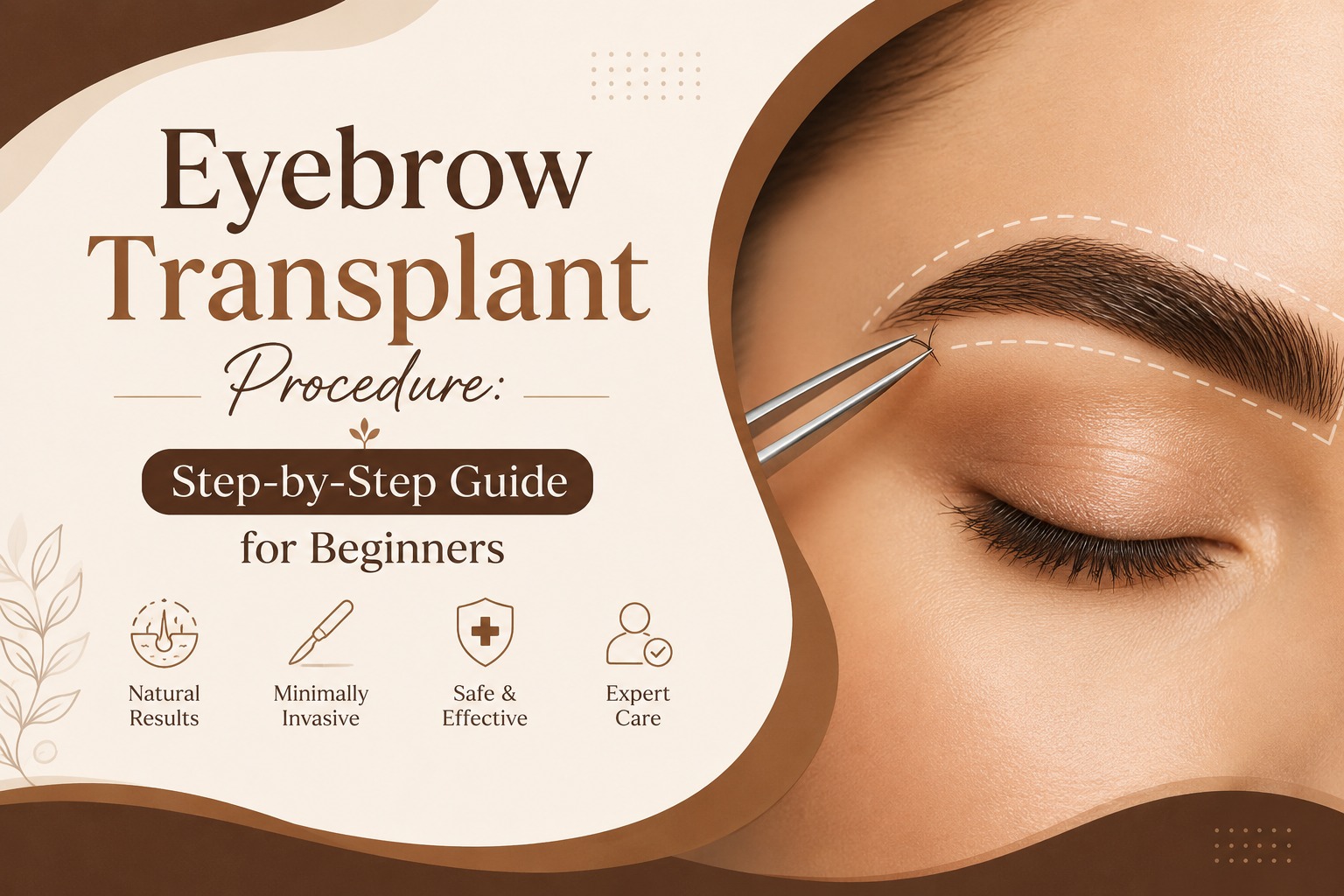
Thin, sparse, or over-plucked eyebrows can affect the way your whole face looks. While makeup and microblading offer temporary fixes, more and more people are now choosing a permanent eyebrow transplant to get naturally full, well-shaped brows. If you're new to this procedure and want to understand exactly how it works, this beginner's guide breaks down the entire eyebrow transplant procedure step by step.
What Is an Eyebrow Transplant?
An eyebrow transplant is a minor hair restoration surgery in which individual hair follicles are taken from a donor area (usually the back of the scalp) and transplanted into the eyebrow region. Because the transplanted hair comes from your own body, the results look natural and are considered permanent.
This procedure is commonly chosen by people who have:
Naturally thin or patchy eyebrows
Over-plucked or over-waxed brows that never grew back
Scarring from injury, burns, or previous surgery
Hair loss due to trichotillomania or alopecia
A faded or unwanted eyebrow tattoo
Eyebrow Transplant Techniques: FUE vs FUT
There are two main techniques used for an eyebrow hair transplant:
1. FUE (Follicular Unit Extraction)
Individual hair follicles are extracted one at a time using a small punch tool, with no cutting or stitching involved. FUE is more popular today because it leaves minimal scarring and has a shorter recovery time.
2. FUT (Follicular Unit Transplantation)
A thin strip of scalp is surgically removed, and follicles are separated from it under a microscope before being transplanted. FUT can yield more grafts in one session but leaves a linear scar at the donor site.
Most modern clinics recommend FUE for eyebrow transplants because eyebrow grafts require a high level of precision, angle control, and a natural growth direction — something FUE allows surgeons to control more accurately.
Step-by-Step Eyebrow Transplant Procedure
Here's what actually happens during an eyebrow transplant surgery, from start to finish:
Step 1: Consultation and Eyebrow Design
The process begins with a consultation where the surgeon evaluates your existing eyebrow hair, facial structure, and donor hair quality. Using your natural facial symmetry as a guide, the surgeon marks the desired eyebrow shape, arch, and density before the procedure begins.
Step 2: Local Anesthesia
Unlike major surgeries, an eyebrow transplant is done under local anesthesia. Numbing injections are given at both the donor site (back of the scalp) and the eyebrow area, so the procedure is virtually painless.
Step 3: Donor Hair Extraction
Using the FUE technique, the surgeon extracts individual hair follicles — typically from the area above and behind the ears, since this hair is finer and grows more slowly, closely resembling natural eyebrow hair.
Step 4: Graft Preparation
The extracted follicles are carefully sorted and prepared under magnification. Only single-hair grafts are used for the eyebrows, since eyebrow hair is naturally thinner than scalp hair.
Step 5: Creating Recipient Sites
The surgeon makes tiny micro-incisions in the eyebrow area, precisely angled to match the natural direction of eyebrow hair growth. This step is the most critical part of the entire eyebrow transplant procedure, as it determines how natural the final result will look.
Step 6: Graft Placement
Each hair follicle is individually implanted into the recipient sites, one at a time, following the natural flow and arch of the eyebrow. A skilled surgeon will vary the angle and direction of each hair to avoid an artificial, "drawn-on" look.
Step 7: Post-Procedure Care Instructions
Once the transplant is complete, the surgeon applies a mild antibiotic ointment and gives detailed aftercare instructions. The entire procedure usually takes 2 to 4 hours, depending on the number of grafts required.
Eyebrow Transplant Recovery Timeline
Day 1–3: Mild redness, swelling, and small scabs around the transplanted area
Week 1–2: Scabs fall off naturally; transplanted hair may shed (this is normal)
Month 1–3: A resting phase where little to no visible growth occurs
Month 4–6: New hair growth begins and gradually thickens
Month 6–8: Full results become visible, with natural-looking, permanent eyebrows
How Many Grafts Are Needed?
On average, an eyebrow transplant requires 50 to 150 grafts per eyebrow, depending on how sparse the existing brow is and the desired thickness. Your surgeon will determine the exact number during your consultation.
Eyebrow Transplant Cost
The cost of an eyebrow transplant varies based on location, clinic reputation, and the number of grafts needed. On average, prices can range from $2,000 to $4,000 for a partial transplant, and higher for full eyebrow restoration. It's best to get a personalized quote after an in-person or video consultation.
Risks and Side Effects to Know
While generally safe, an eyebrow transplant does carry some risks:
Temporary swelling or redness
Minor scarring at the donor site
Ingrown hairs
Uneven or unnatural-looking growth if performed by an inexperienced surgeon
Rare risk of infection
Choosing a board-certified, experienced hair transplant surgeon significantly reduces these risks.
Is an Eyebrow Transplant Right for You?
An eyebrow transplant is a good option if you:
Want a permanent solution instead of daily makeup or microblading touch-ups
Have healthy donor hair available on your scalp
Are looking to restore eyebrows lost due to scarring, over-plucking, or medical conditions
It may not be ideal if you have unrealistic expectations about immediate results, since the full growth cycle takes up to 6-8 months.
Final Thoughts
The eyebrow transplant procedure is a precise, minimally invasive surgery that can permanently restore fuller, natural-looking brows. While the process requires patience — since visible results take months to appear — the long-term outcome is often worth the wait for those tired of temporary fixes like makeup or microblading.
If you're considering this procedure, always consult a qualified and experienced hair restoration specialist to discuss your goals, eyebrow design, and expected results.